Origami Software from Scratch
summary
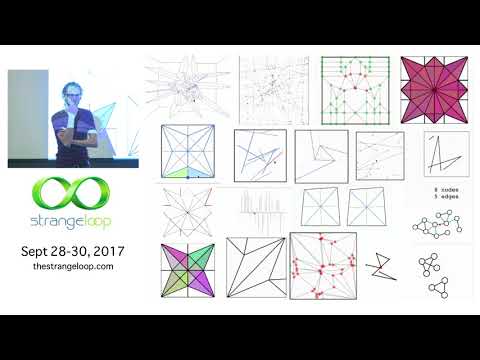
A yearlong build starts from the claim that crease patterns are planar graphs and becomes runnable JavaScript/TypeScript tooling on origami.pw The stack implements face-walking, reflection matrices and adjacent-face trees to simulate flat folding, validates nodes with Kawasaki's theorem, and encodes the Huzita-Justin axioms for construction. The main engineering surprises are epsilon precision bugs, needing custom 2D geometry, and that the library actually folds user designs and exported Voronoi crease patterns for cutting and creasing.
AI-written summary · about
chapters (4)
related talks
 32mComputational Origami
 22mFold, paper, scissors - an exploration of origami's fold and cut problem
 31mThe Art of Functional Programming
 41mNightgraph: Putting Code to Paper with Rust
 22mPolyhedra, I Choose You! Letting Your Passions Take Form
 23mThe algorithmic beauty of plants
 12mAlgorithmically Generated Visual Designs
 54mMaking things with maths