Prototyping with Paper: How Board Games Become Reality

summary
Prototyping uses cheap materials—paper and index cards, dice and tokens—to prove mechanics quickly: an idea goes from sketch to playable within five minutes so designers can run tight playtest loops. Three playtest phases appear—design, guided, blind—and examples include using a 52‑card deck for city infection order and an ugly first print that still becomes a top‑ranked game. The value is concrete: iterate until mechanics work, remove what fails, and confirm with blind playtesting that the rules are complete before polishing, saying no throughout.
AI-written summary · about
chapters (11)
- 0:00Welcome
- 1:29Why board games matter
- 4:22Simple vs complex design
- 7:34Game idea sources
- 8:38What is playtesting
- 10:52Paper prototyping
- 12:34Guided playtesting
- 14:22Blind playtesting
- 16:56Lessons for developers
- 21:01UX over UI
- 21:44Delivering fun
related talks
 21mPrototypes and pitfalls: Lessons from a year of jamming
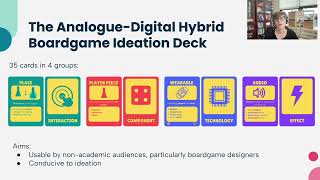 08mHow Boardgame Players Imagine Interacting With Technology
 19mExtracting Design Guidelines for Wearables and Movement in Tabletop Role-Playing Games via a ...
 39mHow to destroy your work (and why you should)
 35mfinding the fun in prototyping
 09mPrototyping in VR: Fail and Learn Fast
 01h 12mThe Game Writing AUA (As Us Anything!)
 24mPrototyping for the physical world