Leveraging Modularity for Real World Development

summary
Fedora Modularity makes multiple versions available and shows how to keep a development stack sticky while the OS updates. The demo builds a React + Node.js + MongoDB app inside Vagrant, packages Node with modular streams, and switches module defaults via a small mo file and shell script. Containers (Docker) are rebuilt for Node 8, 10, 11 and tests run against each with minimal Dockerfile changes; the workflow proves the app keeps working across streams despite a few demo hiccups.
AI-written summary · about
chapters (6)
- 0:00Introduction
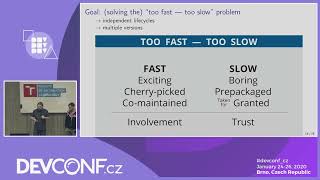
- 1:50Pendulum in software
- 4:18What modularity is
- 7:31Modularity in action
- 15:31Docker module streams
- 19:07Q&A
related talks
 01h 23mAlternatives to Modularity in Fedora
 39mModularity and what you might not know
 47mContainers - the little Linux feature revolutionizing apps
 24mCoreOS Demystified – The Specialized OS Powering OpenShift and Containers
 26mContainerize your Primary Workstation! - Fedora Silverblue
 05mBrian Proffitt - Ignite OSCON 2014
 48mPanel Discussion: Do One Thing, and Do It Well: Special Purpose OSes Apply the Unix App Philosoph...
 25mBuilding and Using Micro Linux Distributions for Docker