Advanced block storage test devices
summary
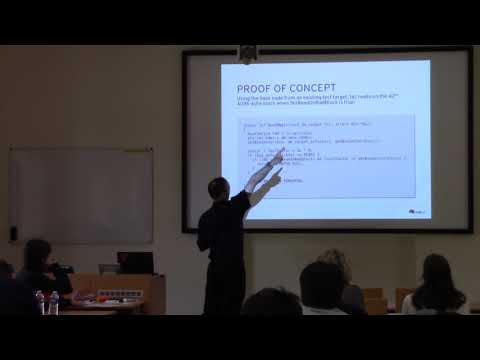
Linux already has scsi_debug, dm-flakey and dm-delay but custom device-mapper targets are built to reproduce tricky failures. Examples include a forgetful cache that honors flush then drops writes, a tracer that records per-I/O data hashes, and a bad-block target that lets tests add/remove arbitrary failing sectors via messages, persists across reboots, logs enable/disable times, and simulates remap-on-write (removes a block on write). Upstream patch lands after Jan 7 submission and helped trigger an XFS fix.
AI-written summary · about
chapters (14)
- 0:00Introduction
- 0:27What is a block storage device
- 3:11Test devices
- 5:00Tracer device
- 5:49XFS bug
- 6:33Existing tools
- 8:12Proof of concept
- 8:37Message interface
- 9:30Kernel log
- 10:16Failed reads
- 10:44Read for writes
- 12:21Release to upstream
- 12:55Remaining work
- 13:47Questions
related talks
 44mVM block error injection, a novel approach for testing Linux storage
 32mUsing Linux Block Integrity in Building and Testing Storage Systems
 39mThe Power of the Device Mapper - From Dm-cache To Dm-zoned
 25mUsing Zoned Block Devices in Fedora
 27mSupporting non-power of 2 zoned devices
 43mThe Forefront of the Development for NVDIMM on Linux Kernel
 45mData Placement in Linux: Evolving Block and File I/O
 03mZoned MC Conference Kick Off