First steps into security engineering

summary
Practical primer that maps specific first steps: why threat modeling and defense-in-depth beat blaming users, concrete attack examples like Rowhammer and acoustic side channels, and a short toolkit list — Metasploit, Wireshark, CVE/Owasp references, TLS/Let’s Encrypt notes. Emphasis is on hands-on learning (Cryptopals recommended), soft skills (documentation, communication, legal/ethics), and where to read (Schneier, crypto primers) so decide by whether a pragmatic checklist and toolset is what’s needed tonight.
AI-written summary · about
chapters (18)
- 0:00Intro
- 0:40Primer
- 1:35Recap
- 2:00Feedback
- 3:35Attitude
- 4:56Security
- 8:49Users
- 10:18Accidents
- 11:30How you think
- 12:13Security packs
- 12:48Indirection abstraction
- 15:11Socratic paradox
- 17:00Soft skills
- 18:50Social human interaction
- 19:24Security staff
- 20:38Big projects
- 21:58Books
- 23:51Misc
related talks
 33mInterview with
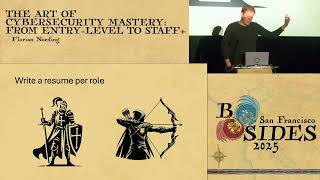 31mThe Art of Cybersecurity Mastery: From Entry-Level to Staff+
 51mThinking Differently About Security
 40mTool Time: Building Your Cybersecurity Architecture Planning Toolbox
 01h 11m2024 Security BSides // Adam Pennington
 57mThe Developer's Field Guide to Software Security
 01h 00mApplying Security Engineering Principles to Complex Composite Systems
 33mLearning from Past Security Breaches: Strengthening AppSec Efforts and Focus