Apache Druid 101
summary
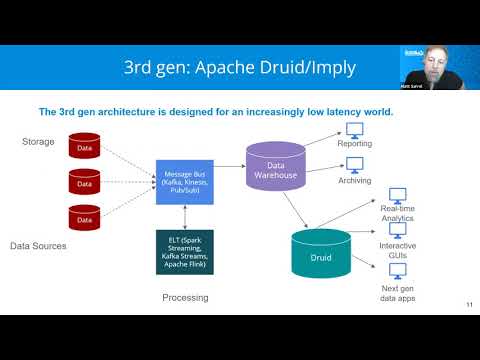
Apache Druid is a column-oriented, time-partitioned database that claims sub-millisecond to sub-second query times by ingesting streaming and batch data, partitioning by timestamp, pre-aggregating at ingestion and using approximate count-distinct and quantile algorithms. It natively streams from Apache Kafka, writes compacted segments to deep storage, and exposes SQL. Production examples include Netflix ingesting 100+ billion rows/day, Walmart running cross-store inventory analytics, and early clusters holding hundreds of terabytes; petabyte deployments often require tens of servers.
AI-written summary · about
chapters (9)
- 0:00Introduction and welcome
- 3:31What is Apache Druid
- 10:22Origins and need for Druid
- 16:31How Druid was designed
- 22:22Who uses Druid in production
- 27:28Is Druid right for your use case
- 30:47Think like a Druid
- 34:17Druid architecture overview
- 36:27Wrap-up and resources
related talks
 45mDruid: Powering Interactive Data Applications at Scale
 20mAnalyzing streaming data with Apache Druid
 46mScalable Realtime Analytics using Druid
 28mThe Heat is On: Architecting for Hot Analytics
 40mBuild Real-time Analytic Applications: The Easy Way
 27mSucceeding with Apache Druid and Clickstream Data
 32mSome Like It Hot
 27mCasting the Spell: Druid in Practice