Strengthening your weakest link

summary
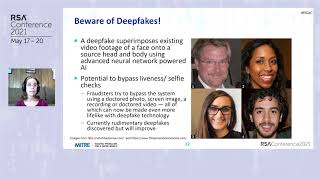
Identity verification is now the weakest link: reported identity theft spikes in 2021 and 45 million credit invisible people in the U.S. make PII and KBA unreliable, while document checks and mobile driver's licenses still fail for reproof and edge cases. Examples include a $1M tax fraud case and many legitimate users locked out. The proposed fix is a machine learning-driven, holistic identity profile with a binding score and continuous authentication, plus phishing-resistant credentials to reduce false positives and fraud.
AI-written summary · about
chapters (7)
- 0:00Introduction and welcome
- 1:03Identity verification challenges
- 3:51Evolution of identity verification methods
- 8:02Document-level authentication limits
- 10:28Why identity verification must evolve
- 12:11Future of identity verification
- 14:19Q&A and contact information
related talks
 15mTransforming security and experience with digital identity
 51mPrivate org & govt perspectives in navigating the tech landscape of remote digital identity proofing
 14mNext-Gen Fraud Strategies Use Data to Onboard Customers Safely
 39mBeyond Recognition: A Cautionary Tale of AI and Identity Fraud
 40mAre You Really You? Higher Assurance Identity Proofing to the Rescue!
 45mApplying Past Lessons for Intel-Driven Identity Threat Detection
 28mML solutions for the real world problems of identity verification
 16mInnovation in Authentication and More