SpaceInk: Making Space for In-Context Annotations
summary
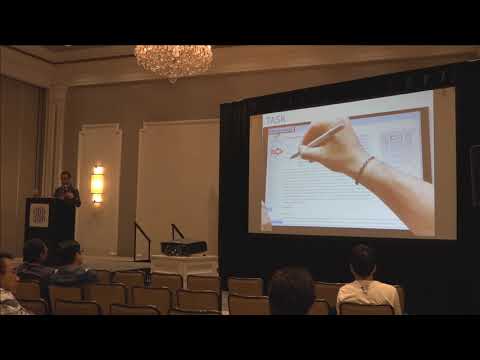
SpaceInk defines a design space of pen+touch techniques that dynamically reflow documents to make room for in‑context annotations, enumerating 25 techniques and classifying space creation as before/while/after and locations between words/lines/margins. A Surface Book prototype uses a pen-only flick gesture to switch overlay versus reflow ink, three-finger swipes to push annotations to the margin, and while-mode expansion that grows space as the user writes. A 12‑participant study (≈30 trials each) shows people favor pen while/after modes, often cannot predict annotation length, and the prototype is usable though fragile when source content changes.
AI-written summary · about
chapters (10)
- 0:00Introduction to SpaceInk
- 1:52In-Context Annotations Explained
- 3:21Design Space of Spacing
- 6:14User Study Setup
- 8:23Study Results Overview
- 10:30Combining Annotation Types
- 12:59Prototype Features
- 13:39Limitations of Approach
- 14:22Conclusion and Future Work
- 14:47Q&A Session
related talks
 12mGarden of Papers: Finding, Reading, and Organizing Research Papers in a Visual, Integrated, and F...
 43mDesigning with Words
 53mA designer's guide to documenting accessibility & user interactions.
 10mCrowdsourcing Scholarly Discourse Annotations
 39mCarving Text at Its Joints: A New Perspective on Writing and Computers
 18mCrayon Drawing Is a Vital Engineering Skill
 28mCode the Docs: Interactive Document Environments
 34mCode the Docs: Interactive Document Environments