Workshop: Run your first game day

summary
Hands-on guide to running tabletop game days that teach incident response: how to set up a two-hour session, write scenarios by pick a trigger, complication, goal, assign simple roles (incident commander, scribe, SME), run virtual or in-person exercises, and wrap with five–ten minutes of feedback. Emphasis is on practicing communication and process, not perfect technical realism; the facilitator improvises answers and enforces narration of actions. Outcome is concrete process fixes, clearer handoffs, and repeatable cadence rather than checklist memorization.
AI-written summary · about
chapters (11)
- 0:00Start
- 5:29What Is a Game Day
- 6:17Tabletop Exercise
- 16:26Scenario
- 20:51Running Your First Game Day
- 26:58Do You Need Special Training To Be a Facilitator
- 27:57Role of a Participant
- 40:30Business Continuity Documents
- 41:48Q a
- 44:24What Level of Research Does the Facilitator Need To Do
- 53:28Roles That Are Useful in Incident Response
related talks
 33mGames We Play to Improve Incident Response Effectiveness
 46mGames We Play to Improve on Incident Response
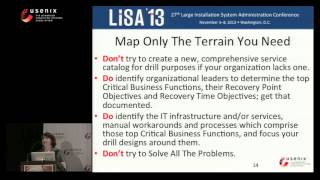 40mBecoming a Gamemaster: Designing IT Emergency Operations and Drills
 30mFake It 'Til You Make It: Get the Most out of Incident Simulations
 39mWar Games – prepare for the unexpected
 20mChaos: breaking your systems to make them unbreakable
 53mSpeaker Panel - Day 1
 45mGameDays: Practice Thoughtful Chaos Engineering