Building, designing, teaching and training simulation environments for Machine Learning

summary
Simulation uses Unity + Unity ML‑Agents as glue to Python/TensorFlow to train controllers inside a game engine. Builds include a racetrack with a camera‑front car taking left/right discrete actions from a 32×24 grayscale camera, rewarded +tiny for staying on track and given a large negative on collision; training produces a TensorFlow graph and a Unity inference build after about one‑hour training for the car. A separate humanoid learns to walk from 215 state variables after roughly 24 hours of training.
AI-written summary · about
chapters (22)
- 0:00Introduction
- 1:55Python adjacent
- 2:27Overview
- 3:08Unity
- 7:19Game Engine
- 7:43AI Explosion
- 8:13Unity ML Agents
- 8:38Research
- 8:53Example
- 9:20Brain
- 10:08Academy
- 10:43Agent
- 12:45UHN
- 13:03Typical setup
- 13:26The problem
- 17:12Brains
- 19:06Agent Actions
- 20:48Adding Machine Learning
- 21:18Learning Brain
- 24:57Python ML Agents
- 26:03Walker
- 26:46Conclusion
related talks
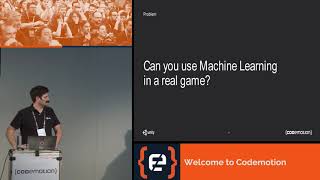 36mImplementing Machine Learning the Unity way
 59mExtended Machine Learning
 41mAutonomous vehicle development with Unity
 43mBuilding Environments for Autonomous Vehicle Training
 32mMachine Learning for videogames in Unity3D
 10mMachine Learning & Unity ML-Agents update
 48mMachine Takeover - Improving Your Game With Machine Learning & AI
 32mThe Road to General AI