A Slice of Zephyr Pi!

summary
Mainline Zephyr now supports RP2040 and RP2350 boards (Pico, Pico W, Pico 2, Pico 2W) with over 15 million sold across variants; developers use a temporary OpenOCD fork for flashing and a Raspberry Pi debug probe to program and debug. Zephyr implements PIO-driven peripherals (UART, SPI, WS2812) and a VS Code extension that builds, flashes and debugs working Wi‑Fi shell demos. RP2350 offers selectable ARM or RISC‑V cores; secure boot disables RISC‑V and A4 silicon fixes earlier glitch attacks.
AI-written summary · about
chapters (15)
- 0:00Zephyr on Raspberry Pi
- 1:26RP2040 and RP2350 family
- 4:14Zephyr community timeline
- 8:56Zephyr features for Pi MCUs
- 10:21Programmable IO and virtual hardware
- 12:29RP2350 dual-core options
- 13:54Rust and Zephyr enhancements
- 15:38Secure boot on RP2350
- 18:27Low power modes in RP2040/RP2350
- 19:32Debugging Pico boards
- 22:52Wi-Fi shell demo on Pico2W
- 24:43VS Code extension for Zephyr Pico
- 28:20Zephyr project setup demo
- 32:03Summary and resources
- 32:46Q&A
related talks
 39mA Slice of Zephyr Pi!
 47mLinux and Zephyr, sitting in a tree (literally!)
 01h 03mZephyr RTOS: Software power tools for constrained devices
 41mZephyr for Open Source Health Devices
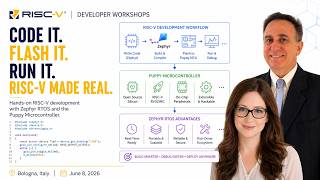 01h 10mFrom Open Silicon to Real Hardware: Hands-On RISC-V Development w/ Zephyr and Puppy Microcontroller
 39mZephyr Project: Unlocking IoT Innovation with an Open Source RTOS
 50mZephyr Project: An RTOS to Change the Face of IoT
 34mZephyr and OpenAMP