Linux and Zephyr, sitting in a tree (literally!)

summary
Zephyr RTOS runs on small MCUs while a Linux box acts as a Raspberry Pi as VPN gateway to reach field devices over Bluetooth, LoRa or 4G/NB‑IoT; provisioning uses SaltStack, ZeroTier and MCUmgr to automate VPN, logging and firmware updates. Build and debug on Ubuntu Raspberry Pi (recommend 4GB) using OpenOCD or J‑Link/ST‑Link tools, add board support by writing device tree overlays, and deploy dual‑partition signed images so a sealed camera sensor in a tree can be remotely upgraded and rolled back.
AI-written summary · about
chapters (17)
- 0:00Start
- 2:47Why We Use Technology
- 7:00Zephyr
- 7:49Hardware Support
- 10:47Does It Run on a Raspberry Pi
- 13:08Can We Get Zephyr onto a Raspberry Pi
- 19:15Options for Development Tools
- 25:13A Device Tree
- 26:21Device Tree
- 29:59Building a New Application
- 37:13Process of Maintaining Your Software for an Embedded Device
- 39:33Zephyr Has an Inbuilt Command Shell
- 40:43Management Protocol
- 41:38Signed Images
- 42:20Debugging Resources
- 44:284g Hat
- 45:10Drawbacks
related talks
 39mLinux+Zephyr: IoT Made Easy
 50mZephyr Project: An RTOS to Change the Face of IoT
 42mTaking Your Hardware to Production with Zephyr RTOS
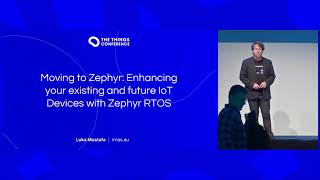 16mEnhancing your existing and future IoT Devices with Zephyr RTOS
 39mA Slice of Zephyr Pi!
 01h 03mZephyr RTOS: Software power tools for constrained devices
 39mZephyr Project: Unlocking IoT Innovation with an Open Source RTOS
 26mTo Boldly go Where Linux Cannot with Zephyr and Eclipse IoT