Introduction to Ethics from an Ethicist-in-Training

summary
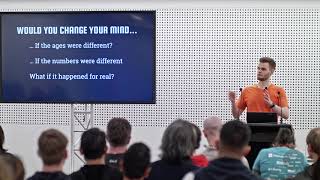
Quick tour of practical ethics that frames decisions as tradeoffs not truths, using trolley/self-driving car scenarios to compare consequentialist, non‑consequentialist and virtue approaches, and applying the doctrine of double effect to distinguish intended from foreseen harms. Emphasis lands on moral weight of doing versus allowing, numbers matter (one versus many), and exceptional duties to insiders. Concrete takeaways: organize collectively—unions as concrete mitigation—avoid building weapons, and accept that some choices carry unavoidable responsibility even when legally permitted.
AI-written summary · about
chapters (27)
- 0:00Introduction
- 0:45Im Extremely Nervous
- 1:39Who am I
- 2:27Academic credentials
- 4:20What we talk about
- 6:05Making decisions
- 7:48Judith Jarvis Thompson
- 9:48Whats right and wrong
- 11:41Pain and death
- 12:20consequentialism
- 16:52evil
- 17:51nonconsequentialism
- 19:11virtue ethics
- 19:55trolley problems
- 23:25agentbased approaches
- 24:09doing vs allowing
- 28:02doctrine of double effect
- 31:51agentbased approach
- 32:57special consideration
- 34:00frequently asked questions
- 34:13unions
- 34:51evil tech
- 35:40weapons
- 36:12money
- 36:23moral case
- 37:40QA Do you consider existing frameworks
- 39:56QA Can an organization itself be ethical
related talks
 37mEngineering & Ethics: Responsibility by Design
 48mPractical Ethics: building it better in 2020 and beyond
 45mFuture Ethics
 49mThe Ethical Engineer
 15mUtility vs Sanctity: Designing an ethically acceptable AI
 32mTowards a Practical Ethics of Generative AI
 32mDigital Ethics in an Unethical Era
 47mHow can we make the most of Ethics applied to AI?