Successful Code Sharing Principles for Mobile Development
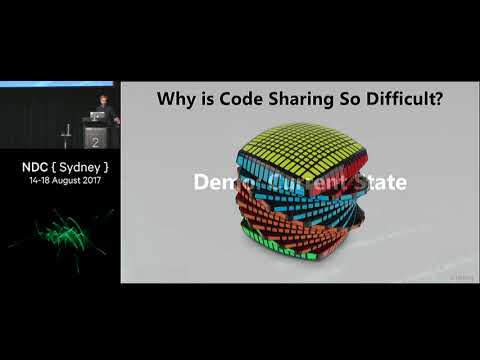
summary
Shows concrete patterns: put shared interfaces and models in a PCL or NuGet package, keep platform projects thin, and register platform implementations through an IoC container so the shared code just asks for an IAccountService. Uses dependency injection, salmon forms embedding plus Prism to auto-wire viewmodels, and MessagingCenter to notify native layers. Demonstrates a login flow where the username binds into a ViewModel, is passed to native code, and warns about Android startup latency and overusing service locators.
AI-written summary · about
chapters (18)
- 0:00Overview
- 2:15Salmon
- 4:50Current State
- 15:33abstractions
- 20:55why
- 24:19how
- 26:30service locator
- 30:08Avoiding spaghetti
- 34:07Demo to UI
- 39:23Dependency Service
- 40:25Messaging Center
- 40:58Messaging Center Example
- 41:33More Code
- 48:53Navigation
- 54:23End Goal
- 54:47Happy Solutions
- 55:17PlatformSpecific Code
- 56:23Wrap up
related talks
 32mDemystifying Native Mobile Apps Architecture
 55mBuilding a mobile enterprise application with Xamarin.Forms, Docker, MVVM and .NET Core
 54mThe Golden Principles of Software Architecture Applied To Kotlin Multiplatform
 50mDesign Patterns for Loosely Coupled Applications
 31mA novel architecture for Multiplatform applications
 46mTechniques for making reusable code
 57mClean architecture with ASP.NET Core
 30mConsistency Principle