Open discussion: Premises and promises of code review

summary
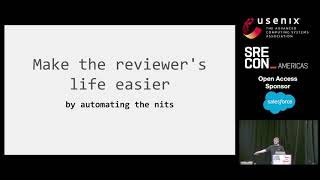
Code review serves two concrete goals: teach the team and keep code fit for purpose. Practical rules that come up are to automate style checks and static analysis so reviewers focus on naming, readability and domain intent; use early draft PRs or small, commit-by-commit reviews to catch wrong directions cheaply; enforce guardrails like coverage thresholds or a limit on PR size (teams mentioned 40 hours) to keep reviews tractable; and treat reviews as mentoring moments, not syntax policing.
AI-written summary · about
chapters (16)
- 0:00Introduction to session
- 1:26Purpose of code review
- 3:56Goals and quality in reviews
- 7:27Timing and process of reviews
- 10:16What to review and focus areas
- 13:26Knowledge transfer and learning
- 17:49Code review as dialogue
- 22:45Early and draft reviews
- 27:07Pull request size and completeness
- 31:39Functionality in code reviews
- 34:06Real-world review challenges
- 37:45Human bias in long reviews
- 41:01Checking out code for reviews
- 42:28Agile and functional correctness
- 45:21Handling multiple PRs per task
- 46:03Closing remarks and summary