The Art of Troubleshooting
summary
Defines troubleshooting as a toolbox of concrete moves: start by checking if it worked before and what changed, use textual diffing between a working and broken run, insert probes or do induced breakage to confirm execution path, bisect the pipeline to narrow scope, treat fixes as tentative and change one thing only, separate measured facts from assumptions, weigh speed/cost versus root-cause repair, and use AI or rubber‑ducking to surface overlooked hypotheses and practical next steps.
AI-written summary · about
chapters (19)
- 0:00Troubleshooting mindset
- 3:12Expert versus fixer mindset
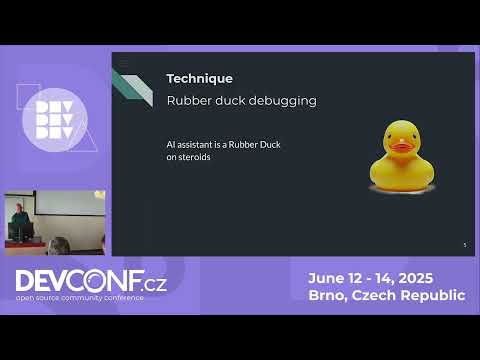
- 5:39Rubber duck debugging & AI
- 7:44Troubleshooter’s toolbox
- 9:28Economics of troubleshooting
- 10:32Verify inputs outputs expectations
- 12:40No sure fixes minimal change
- 14:05Pro questions past state
- 16:12Discover pipeline error flow
- 17:56Facts vs assumptions
- 19:21Narrow causes with facts
- 21:48AI blind spot suggestions
- 22:10Avoid XY problem
- 23:34Peeling onion workarounds
- 25:36Root cause vs practical fixes
- 26:04Q&A
- 27:52Compare working vs broken
- 31:25First troubleshooting questions
- 33:31Adopt methodology in real life
related talks
 20mDebugging: Techniques for Uncertain Times
 24mThe Scientific Method of Troubleshooting
 49mDebugging with the Scientific Method
 38mFrom the Exorcist to Hercule Poirot
 26mHow to Think
 58mStop Trying to Fix Everything
 38mGetting Unstuck: Strategies For Solving Difficult Problems
 01h 08mFighting the controls: madness and tragedy for programmers