How to Prevent AI Agents from Accessing Unauthorized Data

summary
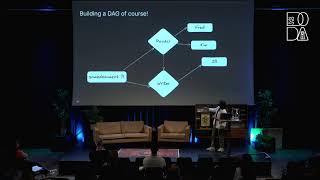
Claims that relationship‑based authorization prevents RAG exfiltration by enforcing fine‑grained permissions and reducing vector search surface, backed by a live pre‑filter demo using SpiceDB, Pinecone, OpenAI, LangChain. Architecture shows two concrete modes, pre-filter (lookup allowed resources) and post-filter (check each candidate), and a working demo that writes relations, serves embeddings, deletes a relation and immediately blocks access. Cites Google Zanzibar scale of ~10 million queries/sec and SpiceDB’s ~5,700 GitHub stars as operational evidence.
AI-written summary · about
chapters (12)
- 0:00AI agent authorization intro
- 2:10Authorization systems history
- 8:56Google Zanzibar architecture
- 15:21AI adoption and RAG pipelines
- 18:52Prevent unauthorized access
- 21:21Live demo setup and schema
- 23:07Fine-grained permissions
- 26:48Demo results and impact
- 27:51Zanzibar-like benefits
- 28:58Future of AI authorization
- 29:18Resources and closing
- 29:40Q&A on pre vs post-filter
related talks
 29mHow to Prevent AI Agents from Accessing Unauthorized Data
 39mSecuring RAG Pipelines with Fine Grained Authorization
 55mYour AI Agents Are Overprivileged: The Case for Fine-Grained Authorization
 40mSecuring AI RAG Pipelines with Fine Grained Authorization
 44mSecuring RAG Pipelines with Fine Grained Authorization
 30mFine-Grained Authorization: The Missing Piece in Agentic AI Security
 30mYour AI Agents Are Overprivileged: The Case for Fine-Grained Authorization
 33mSecuring RAG Pipelines with Fine Grained Authorization