Kogito - Building Intelligent Serverless Apps

summary
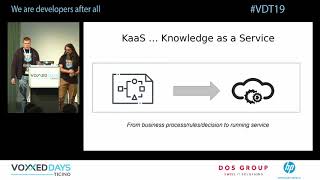
Kogito rebrands Drools/jBPM as cloud-native, serverless microservices that are domain-first and code-generated: assets produce code generation to domain POJOs so processes accept and return typed JSON instead of key/value maps. Runtimes run on Quarkus and GraalVM (Spring Boot optional), use Infinispan for persistence, Kafka for events and reactive streams for timers to handle tens of thousands of scheduled jobs. Tooling offers VS Code and GitHub editors and deployment via Kogito operator + CLI to OpenShift — demo app builds and runs successfully.
AI-written summary · about
chapters (9)
- 0:00Introduction
- 2:07Traditional BPMI
- 13:19Tooling for Kogito II
- 19:39Kogito Runtimes
- 23:53Developing Kogito Travel Agency
- 34:18Running the application
- 34:28Deploying the application to OpenShift
- 40:31Do you want to contribute?
- 44:57Traditional BPM II
related talks
 35mCreate Your First CNCF Serverless Workflow Project with Kogito and Kna...
 43mHow and why I turned my old Java project into a first-class serverless component
 31mServerless Java in Action: Cloud Agnostic Design Patterns and Tips
 15mServerless Development With Kotlin and Kotless
 24mShaping Tomorrow's Technology: Navigating Cloud-Native, Serverless, and Polyglot Programming
 35mDeploying a Modern Serverless Reactive Container to the Cloud
 55mServerless On Your Own Terms using Knative
 46mModern Java App Development in the Cloud