Enjoy The Air

summary
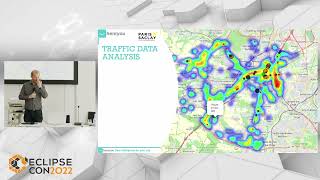
ETA runs Glasgow trials claiming 40% choose trip mode same day and that individual transport choices drive roughly 40% of UK GHG. The team merges air sensors (≈270 fixed meters plus modeled coverage), weather, events, transit logs, surveys and social media to build a causal map of Glasgow and prototypes: Unite (city pattern toolkit), Hello certification (business air-quality standard) and Community Voice (demand‑matching feedback). Early outputs are a measurable feedback loop and policy-ready tools; outcome data await COP26 release.
AI-written summary · about
chapters (26)
- 0:00Welcome and introduction
- 1:15Climate urgency and Greta Thunberg
- 3:41Speaker introduction
- 5:27The climate crisis problem
- 10:23Feedback loops and behavioral change
- 11:29Why focus on air quality
- 12:33Urban environments at risk
- 13:35Glasgow case study overview
- 15:45City behavior analysis
- 18:38Mobility challenges in cities
- 20:25ETA's solutions and tools
- 21:08Poll on sustainable choices
- 22:13Glasgow’s climate goals
- 23:18ETA Unite and community voice
- 25:08Hallow certification explained
- 26:52Creating feedback mechanisms
- 28:39Closing remarks and call to action
- 29:22Q&A: ETA’s origins and Glasgow partnership
- 30:27Q&A: Other UK cities modeling Glasgow
- 31:34Q&A: LA and Glasgow collaboration
- 32:19Q&A: Funding sources for ETA
- 33:20Q&A: Glasgow method and government role
- 34:25Q&A: LA Metro partnership potential
- 35:29Q&A: Personal journey into climate advocacy
- 37:41Q&A: Addressing media noise and feedback loops
- 38:26Closing and thanks
related talks
 42mTime is running out...
 06mWhen Sharing Economy Meets IoT: Towards Fine-grained Urban Air quality Monitoring through Mobile ...
 09mHigh Order Bit
 16mThe SMART Box of AURA Project
 11mIt's getting hot in here
 19mBuilding your green future today: Unlocking secrets to sustainability
 19mIs a smart transportation ecosystem on the way?
 17mMinimizing CO2 Impact from Concept to Deployment in Smart Buildings