Monitoring the net for violent extremist material.
summary
Report compares concrete practices: industry uses MD5 hashing to auto‑flag child‑abuse images and notify NCMEC, governments push URL‑based blacklist and DNS blocking (UK ~1,000 entries reported), and courts force providers to hand over data held in Dublin. Police deploy social media for situational awareness but evaluations say online monitoring rarely prevents lone‑actor attacks. Paper assesses legality, proportionality and proposes cross‑border standards and limited technical reforms around data fusion.
AI-written summary · about
chapters (24)
- 0:00Discussion paper
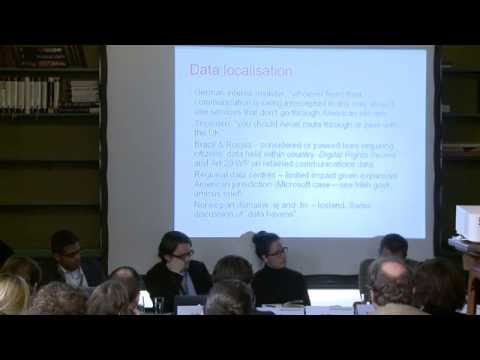
- 4:50Data localization
- 7:44Human rights obligations
- 10:17UN resolutions
- 11:33Reform proposals
- 13:23The perfect global agreement
- 14:53International Corporation
- 15:51European Security Research Program
- 18:01Legalistic Framework
- 20:10Instrumentalizing Citizens
- 21:18Power Dispatchers
- 22:59Citizen Participation
- 25:22Technology Push
- 27:31IDFT
- 29:22UK report
- 33:52Fair procedures
- 34:59How many expect to be blocked
- 35:48Whats your system
- 38:12Security
- 46:07Situational Awareness
- 47:56Key Recommendations
- 48:52URL List
- 51:18Judges everywhere
- 56:55Digital Rights Foundation Pakistan
related talks
 01h 15mSurveillance And Criminal Law.
 01h 09mStrip-searching the internet - upload filters and generalised monitoring ...
 12mBetween Court Orders and Platform Policies: Understanding Law Enforcement and Meta...
 01h 27mSecuring at Scale Building Resilient Defences for a Growing Digital World
 12mA Way Forward: What We Know (or Not) about CSAM & Privacy
 34mCollective Detection Of Harmful Requests
 42mPanel: From Takedown to Touchpoint: An Inside Look at the Data-sharing Pipeline in the Victim ...
 01h 10mSurveillance, Democracy and the State