Data Science Apps: Beyond Notebooks

summary
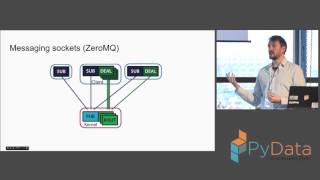
Jupyter notebooks serve as more than exploratory documents: the architecture splits into browser client, server and kernel so notebook cells become callable services. Using Docker, Cassandra or Spark backends, and the kernel gateway, notebooks expose hash-tag endpoints that return JSON, letting a JavaScript front end fetch datasets and trigger ML pipelines. O’Reilly’s hosted notebooks and an Iris clustering demo run live this way; a few lines of config create reproducible REST endpoints that actually work.
AI-written summary · about
chapters (8)
- 0:00Start
- 1:29Learning: The Scientific Method
- 6:02Jupyter notebook what is it?
- 14:46Architecture of a Jupyter Notebook
- 19:55Examples of Jupyter powered narratives
- 24:26Build your own narrative!
- 27:15Jupyter Gateway expose API endpoints
- 32:13Summary
related talks
 01h 29mTurning Jupyter Notebooks into Data Applications
 01h 16mMake your research interactive with Jupyter Dashboards
 46mJump-Start Your Data Science Learning Java & Jupyter Notebooks
 49mExperimenting with Large Data Volumes Using Notebooks
 50mBeyond Interactive: Empowering Everyone with Jupyter Notebooks
 24mJupyter Notebooks for Ops
 43mJupyter: Notebooks in Multiple Languages for Data Science
 43mAdvanced Data Visualizations In Jupyter Notebooks