Transactions: Myths, Surprises and Opportunities
summary
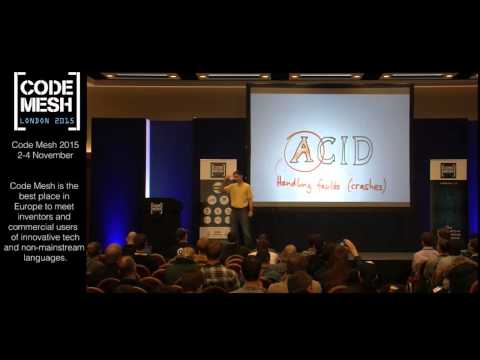
Defines ACID precisely, shows read skew and write skew with concrete examples (bank transfer, ambulance on‑call), and demonstrates why two‑phase locking is slow. Describes two modern approaches: single‑threaded in‑memory execution as in H‑Store/VoltDB and conflict‑detecting serializable snapshot isolation (Postgres, FoundationDB’s distributed SSI existed but is now unavailable after Apple acquisition). Cites a survey finding about half of databases default to read committed, and shows how microservices and notification pipelines break causal ordering.
AI-written summary · about
chapters (10)
- 0:00Start
- 1:30History of Transactions
- 3:43Durability
- 5:05Cap Theorem
- 13:46Dirty Reads and Dirty Writes
- 19:22Write Skew
- 23:10Two-Phase Locking
- 28:05Serializable Snapshot Isolation
- 40:21Causal Consistency
- 45:34Well Meaning Standards
related talks
 41mTransactions: myths, surprises and opportunities
 52mACID in SQL Server: what it is, how it works, and how to live more adventurously.
 38mThe I in ACID
- 52mACID in SQL Server: what it is, how it works, and how to live more adventurously.
- 52mACID in SQL Server: what it is, how it works, and how to live more adventurously.
 47mBeing transactional in 2019 - what does this actually mean?
 01mDon't Drop ACID - Transactions in Distributed NoSQL
 41mConcurrency, Scalability and Transactions -- Myths and Surprises