FRP and Functional Game Programming
summary
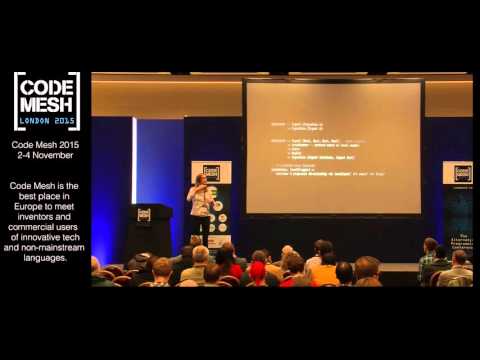
Explains concrete results: a casual game built in Haskell + Elerea, running a 60 fps game loop with signal generators, dynamic per-bullet signals and level subnetworks that can be swapped or put to sleep, integration strategies for a black‑box physics engine via execute/effectful, and measurable tradeoffs — easy pure-function game logic and replayable input captures for property testing versus many streams, potential GC/performance concerns and the work needed to prune or optimize streams.
AI-written summary · about
chapters (22)
- 0:00Intro
- 2:30Functional Reactive Programming
- 2:58Elise Huard
- 4:33FRP
- 6:45External Input
- 7:24Stateful Signals
- 7:45Pure Functions
- 8:35Signals
- 8:50Cycles
- 10:43Levels
- 14:19Bulbs
- 14:55Bolt Generator
- 15:42Physics Engine
- 16:37Execute
- 17:32Cons
- 18:23Complexity
- 18:52Performance
- 19:34Positives
- 19:50Testability
- 20:22User Testing
- 21:41Conclusion
- 22:32Questions
related talks
 29mWhat is Functional Reactive Programming?
 46mFunctional Reactive Programming
 21mFLOREnce: A Hybrid Logic-Functional Reactive Programming Language
 45mRealtime Functional Reactive Programming
 25mFunctional effect and streaming systems in Clojure
 16mFS2 - CRASH COURSE
 01h 04mFrom Functional to Reactive Programming
 24mCombining Functional and Automata Synthesis to Discover Causal Reactive Programs