From Flatland to Spaceland
summary
Overview of current AR/VR tooling and what actually works: consumer headsets like Meta Quest (≈$300) and enterprise HoloLens (≈$3,500) ship now; mobile stacks ARKit/ARCore deliver ARKit occlusion and realistic lighting on phones; cloud services create persistent shared anchors — Azure Spatial Anchors uploads point‑clouds for cross‑platform, multiplayer placement; Google’s Cloud Anchors plus Street View VPS aim at city‑scale mapping; Apple’s RoomPlan uses LiDAR to output parametric 3D room models. Demonstrations show persistence, occlusion and multiuser alignment working today.
AI-written summary · about
chapters (28)
- 0:00Introduction and welcome
- 1:04Inspiration from Flatland
- 2:49About the speaker
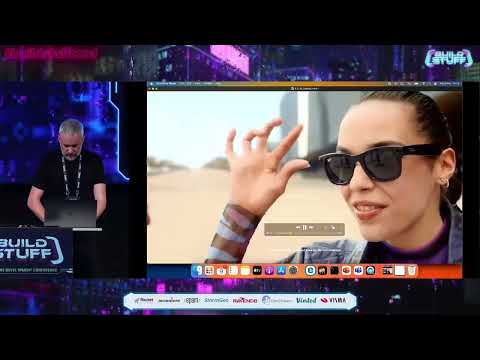
- 4:36AR vs VR explained
- 5:19Meta's investments in AR/VR
- 7:03Meta Quest hardware evolution
- 8:51Meta's smart glasses development
- 10:17Microsoft HoloLens overview
- 11:43HoloLens experience demo
- 13:11Apple's ARKit technology
- 14:56ARKit features and capabilities
- 15:16Google's ARCore and past efforts
- 16:20ARCore advanced features
- 17:22Other AR/VR devices
- 18:46Market growth and opportunities
- 19:32Digital transformation history
- 21:41Smartphone adoption analogy
- 22:45Emerging computing platform
- 24:10Metaverse and AR Cloud
- 25:58Metaverse for AR vs VR
- 27:02Spatial mapping technologies
- 28:48Microsoft Azure Spatial Anchors
- 30:16Azure Spatial Anchors demo
- 31:41Apple's location anchors
- 32:22Apple's Room Plan API
- 33:49Google's digital twin with VPS
- 35:13Cloud-based anchoring solutions
- 36:39Future of augmented reality


