Uncharted Minds: Exploring...

summary
Panel claims burnout is a neurological condition recognized by WHO, driven by chronic hypervigilance and manifesting as emotional exhaustion, cynicism, and reduced professional efficacy. Research cites about 4.8 million positions unfilled globally and finds loss of professional efficacy in cyber security worse than frontline healthcare in one Australian study. Tested interventions include a military‑sourced program and the Integrative Restoration Protocol, both reporting measurable reversals in multiple stress metrics and sleep quality, plus practical fixes like calendar discipline, win‑win communication, and tailored neurodivergent support.
AI-written summary · about
chapters (9)
- 0:00Welcome and introduction
- 1:23Panelist introductions
- 2:47Burnout in cybersecurity
- 15:56Causes of burnout
- 21:56Neuroscience of stress
- 26:50Brain impact of burnout
- 34:39Solutions and interventions
- 38:12Superpowers and neurodiversity
- 41:15Q&A session
related talks
 51mBurnout in Cyber: The Intersection of Neuroscience, Gender, and Wellbeing
 42mHidden Hazards: Unique Burnout Risks in Tech
 29mMental Health Studies in Devops
 56mHidden Hazards: Unique Burnout Risks in Tech
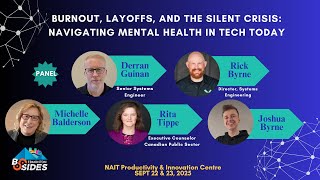 01h 42mNavigating Mental Health in Tech Today
 27mResilience Practical Application & Science
 38mMeeting the Challenge of Burnout
 01h 00mUnderstanding Burnout in Accessibility Work