CAPA: An Architecture For Operating Cluster Networks With High Availability

Talkat 21st USENIX Symposium on Networked Systems Design and Implementation (NSDI '24) · 2024-04-16..04-18·
summary
Google describes CAPA as a three‑layer architecture that funnels all management changes through a thin regulation funnel that enforces best practices such as two rate‑control policies, continuous data‑plane health monitoring, and a rollback path. It adds concrete fixes like BGP fail-static to avoid control‑plane withdrawals. Case studies and postmortem reanalysis claim CAPA could have prevented ~84% of past management‑induced incidents and coincide with an 82% reduction in cumulative incident duration normalized to fleet size over five years.
AI-written summary · about
chapters (10)
- 0:00CAPA introduction
- 1:41Network management outages
- 3:28Network best practices challenges
- 5:15CAPA enforces safety
- 7:45Failure domains isolation
- 9:09Rate control for workflows
- 11:16Safety versus velocity
- 12:21CAPA’s impact on outages
- 14:26Success stories
- 15:50Summary & Q&A
related talks
 18mCCC: Re-architecting Delay-based Congestion Control in Datacenter Networks
 16mGlobal Capacity Management With Flux
 12mCost-effective Cloud Edge Traffic Engineering with Cascara
 21mChange Management in Physical Network Lifecycle Automation
 18mAbstracting Multi-Cluster Topologies With CAPI and Linkerd for Internal Developer Platforms
 32mIntelligent cloud networking: Create simplicity, remove complexity (PRT214)
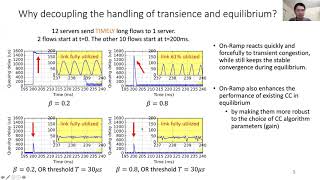 12mBreaking the Transience-Equilibrium Nexus: A New Approach to Datacenter Packet Transport
 25mEnsuring Connectivity via Data Plane Mechanisms