Security's Holy Grail: Predicting Attacks Before They Happen

summary
Using data from a 200,000-employee dataset, the presenters examine which employees are most likely to make security mistakes by measuring ‘human risk’ based on past security decisions. The talk explains the measurement methods and highlights empirical trends in vulnerable populations, then shows how to apply those findings to reduce incidents using employee-focused risk assessment and mitigation.
AI-written summary · about
chapters (15)
- 0:00Intro
- 3:43Investigating the human attack surface
- 10:43Benchmark: phishing emails RECEIVED
- 15:19Benchmark: Number of successful phish
- 16:03Benchmark: malware received
- 18:24Benchmark: Number of successful malware
- 20:05Benchmark: browsing policy violations
- 21:31Combinations of risky behaviors
- 27:49Training doesn't solve human risk
- 34:31Groups are harder to manage than individuals
- 38:03Benchmarking is better than a briefing
- 40:42Equip users to do the right thing
- 44:47Human risk is a role-playing game
- 46:04Summary Of Key Findings
- 47:50Applying These Findings
related talks
 40mLeveraging Human Risk Data to Strengthen Cyber Resiliency
 01h 07mKeynote Presentation Blinded by “the weakest link” A New Perspective on Human Risk
 44mOpening Keynote: Prove It! Confronting Security With Data.
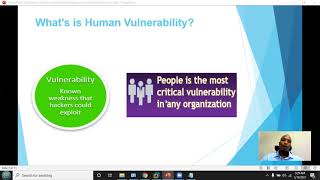 41mHuman Vulnerability Management and Assessment in the Age of Zero Trust
 14mSecurity Awareness in the Corporate Environment
 54mEmployees Are the New Perimeter- How the Pandemic Shaped Workforce Risk
 48mThe Future of Security isn't Preventing Attacks
 26mThe Risky Business of Risk Illiteracy (Sean Juroviesky)