Time Series Analysis in Python: Easy Tools for Scientific Insight

summary
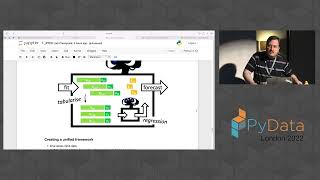
Concrete demos show library APIs, data shape and results: Sktime follows a scikit‑learn style fit/predict workflow; Aeon sits on top of that ecosystem; Nixtla (NeuralForecast, MLForecast) exposes >30 deep models, uses PyTorch and Numba, and offers AutoModel tuning with Optuna. Examples load multiseries frames with id, ds, y columns, run LSTM and N‑BEATS side‑by‑side, return forecast tables, and report easy benchmarking and feature transforms like minirocket and catch22.
AI-written summary · about
chapters (17)
- 0:00Introduction
- 0:23Speakers
- 1:09Time series data
- 3:41Why time series analysis
- 5:28Key time series tasks
- 9:00Anomaly detection
- 11:08Patterns in time series
- 12:09Python libraries
- 14:57NIXLA forecasting
- 17:25Preparing data for forecasting
- 19:34SciKit-Time overview
- 20:38Time series classification
- 21:41Benchmarking features
- 22:25Library comparison
- 23:28Library features
- 24:11Choosing the task
- 25:16Closing & Q&A
related talks
 30msktime: python toolbox for time series- next-generation AI
 01h 28msktime - python toolbox for time series: advanced forecasting - probabilistic, glob...
 01h 30msktime - python toolbox for time series
 44mMethods and Tools for Time Series Data Science Problems
 34mTime series for scikit-learn people
 01h 27mIntroduction to Machine Learning with Time Series
 01h 26mSktime—Python Toolbox for Time Series: How to Implement Your Own Estimator
 01h 43m(Serious) Time for Time Series