Self-healing system for UI tests using ML

summary
A system is built around Python Playwright and pytest that wraps the page API with a self-healing locator which captures element fingerprints and, on timeout, generates alternatives (133 in an example) scored by a random forest classifier using 85 numerical features across six categories. Alternatives above a 0.5 confidence threshold are tried until one succeeds; successful and failed heals are logged. Demo shows pipelines recovering from broken selectors, model trained on synthetic data and slated to retrain on real events plus add notifications.
AI-written summary · about
chapters (11)
- 0:00Introduction and background
- 2:11UI test fundamentals
- 6:00The UI testing problem
- 7:26Self-healing system flow
- 9:47Implementation details
- 12:32Interaction and fingerprinting
- 15:21Healing logic and ranking
- 18:56Machine learning model
- 21:44Feature engineering
- 28:18Practical demonstrations
- 29:47Future work and conclusion
related talks
 30m'Self-Healing Tests' - The holy grail of test automation?
 54mStability in Unstability: Self-Healing Test Automation
 25mSelf-Healing in Test Automation
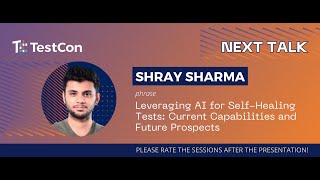 33mShray Sharma: Leveraging AI for Self-Healing Tests: Current Capabilities and Future Prospects
 55mStability in Unstability: Self‑Healing Test Automation
 15mLLMs and Test Automation: A New Era of Self Healing
 31mSelf-Healing or Self-Killing?
 44mSelf-healing Test Automation 2.0: The Future