Working Effectively with People in Government on Open Source Projects
summary
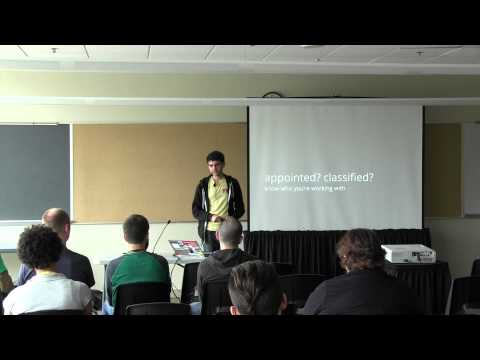
A practical playbook for partnering with government: advocates apply Code for America methods in Chattanooga to draft an open data policy, use short release cycles and a bug tracker to build trust, and negotiate transparently to capture more shared value. Key constraints are the budget calendar, elections, procurement rules and the difference between appointees versus classified employees. Advice includes planning maintenance, addressing security/legal owners up front, and sharing credit so projects actually get adopted and sustained.
AI-written summary · about
chapters (20)
- 0:00Introduction
- 0:17Jasons Background
- 1:38Code for America
- 2:16Civic Hacking
- 4:29Why Hack
- 7:33Nonviolent Communication
- 9:19Plain Speech
- 12:05Negotiation
- 14:27Visual Model
- 16:54Clarification
- 18:21Early Optimization
- 20:34Share Credit
- 22:35Follow the Variable
- 26:38Who are you working with
- 30:38Budgeting
- 36:18Wrap Up
- 36:46Questions
- 39:16Are people in government more sensitive
- 41:12Executive sponsorship
- 43:46Resources
related talks
 15mApplying Open Source Principles to Federal Government
 33mAn Inside and Outside Look at the Government’s Ongoing Journey with Open Source Tech
 01h 09mMaking Government 2.0 a Reality: A Citizen's Guide to Essential Reforms
 41mLessons Learned from Code.gov: The U.S. Federal Government’s Open...
 05mConnecting Open Source Projects with Public Institutions
 32mMunicipal collaboration on open source software - Why is it so hard?
 49mCommunities Over Code: How to Build a Successful Project
 23mBest Practice in Delivering Successful Open Source Engagement in Organisations