Random
summary
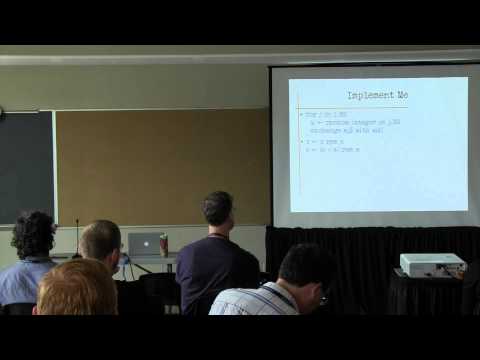
Covers why common shuffles and simple PRNGs fail and what to use instead: demonstrates the correct Fisher–Yates in-place shuffle, shows how linear congruential generators leak state and how time-of-day seeds allow attackers to recover decks, and recommends cryptographically secure PRNGs (e.g. ISAAC) + Diehard tests for validation. Describes OS-level sources (/dev/random, /dev/urandom) and a DIY hardware entropy device — a USB TRNG using a zener diode aimed at ~1 Mbps for about $15 — prototype is still being debugged.
AI-written summary · about
chapters (9)
- 0:00Randomness introduction
- 10:01Philosophy of randomness
- 22:32Randomness in practice
- 30:53Shuffle algorithm mistakes
- 41:03Pseudo-random number generators and their flaws
- 53:18Correct shuffle implementation
- 1:01:05True random seeds
- 1:13:07True randomness applications
- 1:22:55Q&A
related talks
 14mlol im so random!
 45mInside the Linux Kernel Random Number Generator
 41mCybersecurity and random number generators
 30mMy code is being hacked!
 28mRandomness in Python: Controlled Chaos in an Ordered Machine
 19mRNG and Me: A Peek Behind The Random Number Generator Curtain
 15mWhy TRULY Random Keys Are CRITICAL (and How Quantum Dice Fixes It)
 50mHow random is Random? Pitfalls of Random in .NET 6