Face Verification using Few-shot Deep Learning

summary
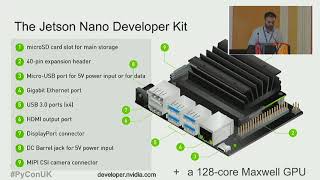
Deploys FaceNet on Jetson Nano using PyTorch for training and TensorRT to convert the model to FP16 with TensorRT for edge inference, with camera integration producing a working prototype. Focuses on few‑shot claims: metric learning with triplet loss and metric learning / prototypical and matching networks, evaluated on Omniglot and MiniImageNet style setups (typical 20‑way 5‑shot tasks, k ≤ 5 versus ImageNet’s 1,000×1,000). Shows the actual pipeline, model conversion, and that the Jetson Nano runs the verifier in real time.
AI-written summary · about
chapters (12)
- 0:00Introduction
- 4:45Outline
- 5:22Deep Learning
- 12:30Datadriven Approach
- 19:17Benchmark Data
- 22:10Pretrained Network
- 26:10Metric Learning
- 29:36Face Recognition
- 30:58Code snippet
- 36:51Metric of Comparison
- 43:36Questions
- 49:54Matching Networks
related talks
 28mMachine Learning on the Edge
 47mHow I designed the most efficient deepfake detector in the world with $100
 18mDeploying ML solutions with low latency in Python
 20mComputer Vision at the Edge with OpenVINO
 59mML and the IoT: Living on the Edge
 56mDeep Fakes 2.0 - How Neural Networks are Changing our World
 39mBuilding Highly Scalable Facial Recognition Pipelines
 31mFace Recognition