Transforming a Java Desktop Application to Kotlin Multiplatform

summary
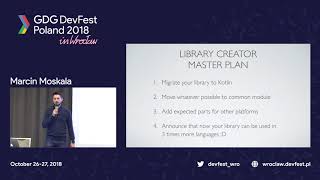
Attempt to port a Java Swing cycle-editor fails to reuse UI: Swing components remain JVM-only so the UI must be rewritten per platform, but the heavy business logic converts well when refactored into pure functions and a single state data class. Uses IntelliJ project wizard, Gradle Kotlin DSL and expect/actual to expose platform hooks, moves models to commonMain using the common stdlib, and recommends a single render(state) entry point; mentions Kotlin DSL, kotlinx.serialization, Ktor and Clock as usable libraries.
AI-written summary · about
chapters (8)
- 0:00Introduction and motivation
- 4:25What is Kotlin Multiplatform
- 11:33Existing Java application overview
- 14:31Challenges with UI dependencies
- 17:53Why I failed at conversion
- 19:40Architecture tips for success
- 24:42Conversion strategies
- 26:49Conclusion and resources
related talks
 36mExploring Kotlin Multiplatform
 41mIt Just Works
 48mEffective Multiplatform Kotlin Development
 22mArchitecting a Kotlin Multiplatform App
 46mGoing Multiplatform with Your Android App
 48mEffective Multiplatform Kotlin Development
 45mThe Adventures of Kotlin And Compose Through the Multiplatform World
 32mKotlin Multiplatform in Action