Litho: Best Practices for building efficient UIs
summary
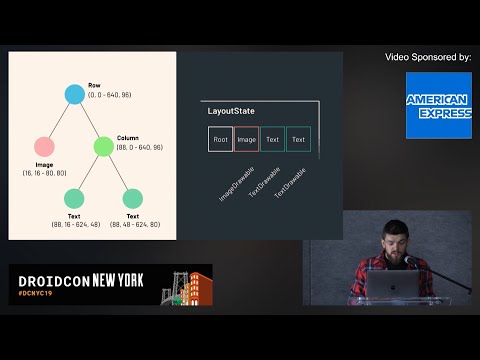
Litho claims up to smoother scrolling by moving layout and measurement to the background layout thread, flattening view hierarchies and recycling individual widgets instead of whole views. It uses Facebook’s Yoga engine, generates lightweight drawables/views via mountspecs, and supports incremental mount to spread mounting across frames. Concrete knobs include mount pool sizing (images use a pool size 30), a diffing/reconciliation path to reuse measurements, lazy state updates and cached values, Flipper/Yoga playground for debugging, and an experimental reconciliation that speeds up large lists.
AI-written summary · about
chapters (15)
- 0:00Introduction to Litho
- 1:37Declarative UI basics
- 4:47How Litho works under the hood
- 10:07Mount specs and leaf nodes
- 14:43Layout and mount diffing
- 16:11Incremental mount optimization
- 18:01Gotchas and optimizations
- 18:43Managing state in Litho
- 24:47Caching heavy computations
- 26:32Animations in Litho
- 31:33Migrating to Litho
- 33:40Advanced framework configurations
- 36:34Debugging and tools
- 39:51Resources and next steps
- 41:45Q&A