DPDK in Databases: Why Isn’t It More Common?

summary
Databases see 10x–80x throughput gains versus kernel TCP stacks in historical DPDK experiments (memcached/MICA comparisons) and often reach RDMA/FPGA-class latency, but adoption stalls because teams face an API mismatch with POSIX sockets, compliance and operations concerns, and the engineering cost of replacing TCP with message passing. Practical fixes proposed: an easy-mode DPDK library exposing send_message/receive_message semantics, service or embedded deployment, pluggable crypto/compression/DMA offloads, and incremental porting paths so existing DB codebases require minimal invasive change.
AI-written summary · about
chapters (8)
- 0:00Why DPDK isn’t common in databases
- 3:56Problems with TCP for databases
- 5:40Micah’s DPDK performance breakthrough
- 8:28Barriers to DPDK adoption
- 10:56Existing DPDK-based solutions
- 13:07Improving DPDK usability
- 15:19Future of DPDK and hardware
- 17:11Q&A: Porting databases to DPDK
related talks
 52mSuggestions to Enhance DPDK to Enable Migration of User Space Networking Applications to DPDK
 28mDPDK vs ODP: A comparison
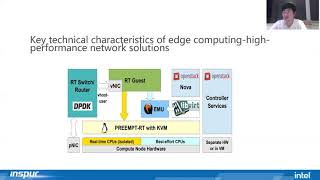 25mDPDK performance optimization for edge computing scenario
 28mLow-Latency, Deterministic Networking with Standard Linux using XDP Sockets
 20mCan OVS-DPDK be further optimised?
 37mSPDK Based User Space NVMe Over TCP Transport Solution
 29mDPDK on Arm64 Platforms
 38mTelecom Packet Processing and Correlation Engine Using DPDK