Telecom Packet Processing and Correlation Engine Using DPDK

summary
A DPDK-based 5G packet processing and correlation engine extracts metadata from N11, N4, N3, S1-U and S11, uses DPDK mbuf APIs for header stripping and manipulation, and runs lockless session state in per-core rte_hash tables so each core owns its hashes. RSS and NIC flow configuration scale GTP-U processing across cores for 100Gb links, NUMA-aware mempools and CPU isolation improve throughput, and deployments moved from Intel x710 to e810 with packet-broker front ends; the system works in production.
AI-written summary · about
chapters (12)
- 0:00Introduction and team
- 1:28Company overview and value
- 3:38Problem statement in telecom
- 6:08Why DPDK for telecom
- 6:315G correlation use case
- 9:25Deployment scenarios in telecom
- 13:29DPDK software architecture
- 16:22Scaling the solution
- 18:03Subscriber-aware load balancing
- 20:16Key learnings and optimizations
- 27:55End-to-end packet monitoring
- 30:57Q&A session
related talks
 36mRunning High-performance User-space Packet Processing Apps in Kubernetes
 31mFlow-based Packet Processing Framework on DPDK and VPP
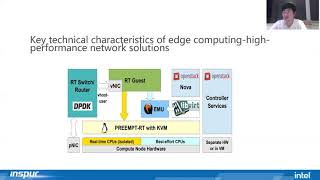 25mDPDK performance optimization for edge computing scenario
 26mRunning DPDK on Non-Cache Coherent Platforms: Challenges and Solutions
 06mOptimizing IP Camera Streaming with DPDK
 02h 53mPreview Sessions
 22mAnalyzing Packet Data Flow in Chiplet Based SoCs
 25mKeynote: Network Transformation: Are We Ready for 5G and Edge Clouds?