DPDK vs ODP: A comparison

summary
Compares concrete differences: non-blocking queues in ODP vs DPDK’s lock‑free blocking queues and why control‑plane preemption blocks dataplane; ODP’s subpools (multiple buffer sizes) vs DPDK’s typical single 2KB pool, saving RAM and CPU; ODP’s distributed scheduler that runs on packet cores versus DPDK’s dedicated‑core scheduler; PCIe tape/coalesced mode that cuts transactions and fixes a 64‑byte L2 forward ceiling (stuck ≈79% line rate until packets enlarge), and a proposed hybrid fixed‑metadata + separate data format.
AI-written summary · about
chapters (8)
- 0:00Introduction to comparison
- 0:48Why compare DPDK and ODP
- 2:34Non-blocking queues in ODP
- 5:25Packet memory optimizations
- 8:21Software scheduler differences
- 13:32Packet format challenges
- 21:31Feature integration plans
- 21:54Q&A session
related talks
 20mCan OVS-DPDK be further optimised?
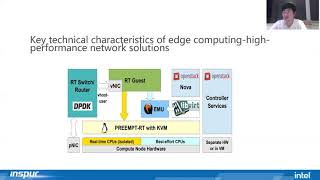 25mDPDK performance optimization for edge computing scenario
 23mDPDK in Databases: Why Isn’t It More Common?
 26mRunning DPDK on Non-Cache Coherent Platforms: Challenges and Solutions
 14mPerf Characteristics of Userspace & Kernel-Space Datapaths in Container Networking
 18mOpen vSwitch with AF_XDP as a userspace datapath
 33mBringing packet queueing to XDP
 54mPDCP Packet Processing Library in DPDK - Libpdcp