Managing State with RxJava
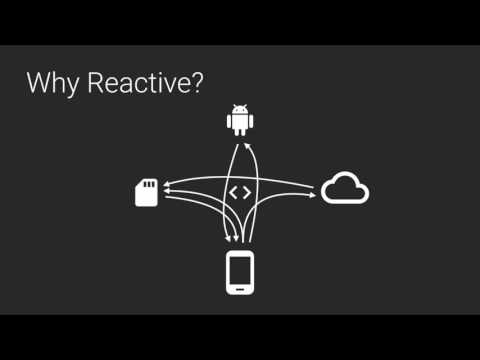
summary
Shows how RxJava plus RxBinding and Retrofit turn UI events into actions and results and use scan to produce a single UI model so lifecycle and concurrency stop being ad hoc. Demonstrates splitting event streams with publish, converting clicks and text into typed events, mapping those to reusable Transformers, and merging results into a unidirectional state stream. Tests and rotation survive because models are emitted on the main thread and the approach eliminates UI side effects and enables unit testing.
AI-written summary · about
chapters (11)
- 0:00Introduction
- 0:30The problem with imperative
- 3:30Compound complexity and UI
- 7:30Reactive architecture benefits
- 11:15Analyzing imperative reactive
- 16:40Unidirectional data flow
- 21:33Implementing clean reactive
- 25:31Modularizing reactive logic
- 30:18Handling multiple requests
- 35:27Decoupling actions and results
- 41:43Pattern summary and testing
related talks
 36mFunctional MVVM using RxJava and Android Data Binding
 34mEffective Reactive Architecture
 28mApplying Rx Best Practices to Your Architecture
 39mReactive Android: RxJava and beyond
 39mAdvanced Networking with RxJava + Retrofit
 42mHands on MvRx: Building Real Apps
 35mModel View Intent, Embracing Reactive UI's
 37mA Practical Guide To master Rx Streams