3D Rendering, the Grand Illusion Explained
summary
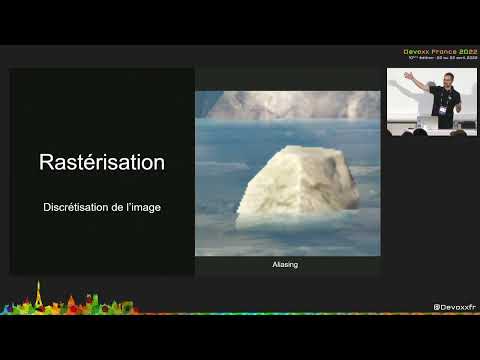
Covers how 3D rendering turns vertex/triangle lists into pixels using matrix transforms (object→world, world→camera/projection), normalization for resolution, and rasterization that interpolates attributes. Shows a 4,823‑vertex model exported from tools like Maya/Blender into GPU shaders (C‑like vertex and fragment programs), and explains textures/normal maps, ambient+diffuse+specular lighting, and post‑processing (anti‑aliasing).
AI-written summary · about
chapters (11)
- 0:00Introduction
- 0:41Presentation
- 1:303D Object
- 1:43Vertex
- 3:05Object Space
- 4:14Camera Space
- 7:22Color
- 7:58Texture
- 8:58Lights
- 10:29Materials
- 11:28Conclusion
related talks
 37mRendering performance inside out
 31mPainting With Light
 52mMath and Modeling for Camera Developers
 50mGeometry on Steroids: Practical Experience Porting Heavy Computation to GPU
 01h 27m“Patterns and Techniques Used in the Houdini 3D Graphics Application ”
 25mDecoding Algorithmic Artistry: Visual Generative AI
 32mMagic of Computer Vision Unraveled
 22mDreamSketch: Early Stage 3D Design Explorations with Sketching and Generative Design