What we learned after a year developing Kubernetes operators?

summary
Kubernetes operators are used to extend cluster automation; the talk reviews one year of experience building and running about ten operators in production at Artifakt. It covers why they chose to develop operators for common apps (Prometheus, MySQL, PostgreSQL, cert-manager, Traefik), what they learned and mistakes made, and practical topics like testing, deployment, and how the reconciliation loop works.
AI-written summary · about
chapters (15)
- 0:00Introduction
- 0:37Etienne Coutaud
- 1:03A bit of context about Artifakt
- 5:16Deep dive into the platform (1/2)
- 8:06Declaring a database in Artifakt
- 13:34Taking the time to define your CRD with the business
- 18:51Use a framework to build your controller!
- 22:05Frameworks at your disposal
- 23:37Before reconciliation: the admission controller
- 26:26An object validation webhook
- 33:25Conditions and lifecycle of objects
- 39:34The finalizer
- 40:39Evolving CRDs and ensuring compatibility
- 43:41Overall code organization at Artifakt
- 45:08Conclusion
related talks
 42mKubernetes Operators: What are They and Why would You Need Them?
 33mHow to Create a New Kubernetes Operator?
 43mLessons learned writing 10+ Kubernetes Operators
 39mKubernetes Operators: Managing Complex Software with Software
 07mWhy You Care About Kubernetes Operators
 01h 58mKubernetes Operators Within Reach of Any Developer
 36mLessons learned writing 10+ Kubernetes Operators - Lars Francke and Jannik Heyl
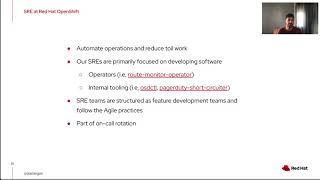 20mLessons Learned Using the Operator Pattern to Build a Kubernetes Platform