Open Collaboration for Civic Impact

summary
CivicMakers argues that civic tech needs a reproducible lifecycle—Discovery, Alpha, Beta, Live—using co-discovery street interviews, low‑fidelity prototypes and analytics to validate problems before building. Examples: a prototyped portfolio in the cloud tested at library outreach; experiments with a Civic Commons marketplace (previously defunded); engagement through Code for America brigades and 40,000+ citizen hackers. Key claims: $6.9B spent on civic software (2015) yet duplication, failed handoffs, and no systemic knowledge‑sharing leave few sustained, maintainable deployments.
AI-written summary · about
chapters (7)
- 0:00Start
- 1:05Governance is changing New era of government innovation (18F, USDS) Explosion of community-driven solutions adjacent to government (brigade network, open source) Shifting nature of work (P2P, millennials, gig- based)
- 5:16Discovery • Problem statement • Research • Define hypotheses & identify assumptions • Prioritize opportunity areas
- 5:43Alpha · Design prototype • Recruit and test with users • Define MVP • Create project plan and assemble team
- 7:17Live • Launch / handoff Promote to partners, stakeholders and key audiences • Project debrief & evaluation • Maintenance & scalability plan • Revised problem statement, product description, and
- 9:33Problem Statement Definition A clearly defined problem is not possible without input from individuals, communities and institutions experiencing the problem.
- 10:45Primary and Secondary Research Secondary: • Landscape analysis - what's out there already? • Determine magnitude of the audience and issue
related talks
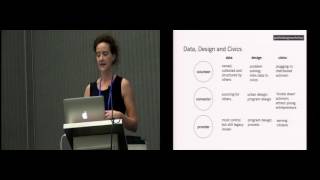 21mData, Design and Civics: An Exploratory Study of Civic Tech
 35mDesigning for Impact in Civic Data Science
 12mThe O'Reilly Radar
 26mOpen Source and the Volunteer Workforce
 01h 06mKeynotes 09/18/2021
 08mKen Goldberg interviewed at Web 2.0 Summit 2011
 12mInterview
 36mCommunity Data: What to Measure and Why?