“A Crash Course in Open Source Licensing"
summary
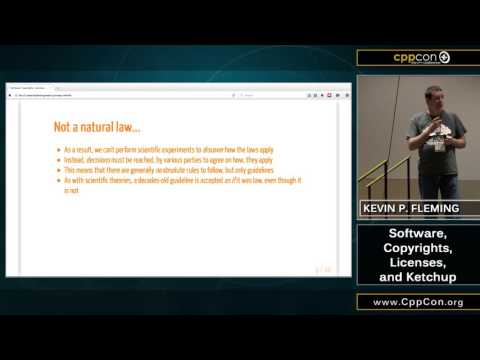
A practical walkthrough of how software licensing actually controls copying, modification and distribution: explains that copyright gives exclusive copying rights, distinguishes reading from copying, shows when running code is allowed, and why attribution and offering source (not just a binary) matter. Uses concrete scenarios — bulletin board printouts, flash drives, GitHub repos, contributor agreements, relicensing choices — and contrasts the effects of GPL vs Apache 2 style terms (copyleft obligations versus permissive sublicensing).
AI-written summary · about
chapters (22)
- 0:00Introduction
- 1:28Understanding licenses
- 4:08Copyright fundamentals
- 7:21Legal implications
- 11:26License restrictions
- 13:11The scenario of Bob
- 17:36Fair use and sharing
- 23:15Distribution rights
- 26:43Website terms of service
- 29:05License to run code
- 31:23Intellectual property
- 33:36Licensing requirements
- 36:03Attribution and modification
- 38:26Reputation and enforcement
- 40:45Source code access
- 45:39GPL and copyleft
- 49:25Summary of requirements
- 52:10Licensing contributions
- 1:00:17Distributing source code
- 1:06:53Prior art and patents
- 1:12:30Additional restrictions
- 1:21:45Compilation copyrights
related talks
 28mLicence to Code: Understanding open source licenses for developers
 57mWhat You Need to Know About Open Source—Trust Me, I'm a Lawyer
 01h 04mWhat You Need to Know About Open Source—Trust Me, I’m a Lawyer
 42mOpen Source Licenses: Between Parish Wars and Radicalism
 51mOpen Source License Compliance
 24mYou Have Nothing To Lose But Your Chains
 33mResponsibility in Depth: Layering Licensing, Regulation, and More
 25mPatents and Copyright and Trademarks… Oh, why!?