Building decentralized and serverless html5 apps (...)
summary
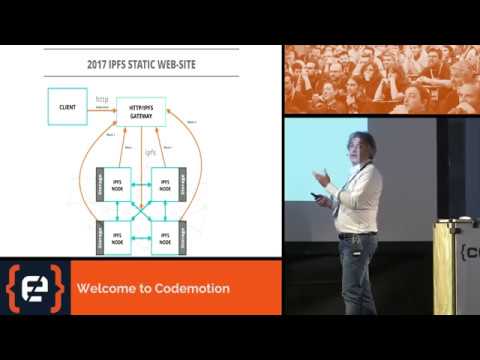
Shows how to deploy a working HTML5 DApp by adding an index.html and a folder to IPFS, retrieving the same content from the public gateway (ipfs.io) and using Merkle DAG folder hashes for content addressing and pinning. Demonstrates EmbarkJS + Ethereum running on a local simulator: a simple contract stores the number 15 and returns it, proving end-to-end storage and retrieval. Notes: IPFS is immutable (updates create new hashes), gateways can bottleneck, browser IPFS and Ethereum RAM needs (~2GB) limit current client use.
AI-written summary · about
chapters (14)
- 0:00Intro
- 1:12History of the Internet
- 4:40Service computing
- 6:10Distributed and centralized systems
- 10:51Dat and IPFS
- 13:23What is IPFS
- 17:36Installing IPFS
- 18:52Local interface
- 19:31File browser
- 20:15IPFS
- 29:10PFS
- 31:10Recap
- 35:10Demo
- 37:10Contracts
related talks
 41mLearn how to build decentralized and serverless HTML5 applications...
 45mHow to build decentralized serverless html5 applications
 36mBuilding Decentralized Apps with Angular and Embark
 51mDistributed Apps with IPFS
 01h 00mIPFS — InterPlanetary File System with Node.js
 30m🛠️ IPFS in JS; Helia ramp-up
 23mIPFS and how to distribute the web
 25mJavaScript Apps Going Inter-Planetary