Strangling the Legacy with Kubernetes

summary
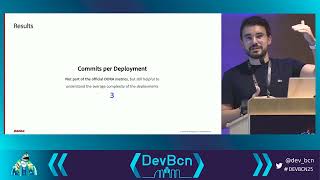
Case study of Fleet Complete shows concrete steps and numbers: teams standardize on Kubernetes on EKS, deploy with Flux gitops and Jenkins, expand deployments from one to four datacenters without adding ops headcount, and cut customer-impacting data ingest incidents from 75→0. Lead time drops to ~1 hour, deploys occur weekly or multiple times per day, failure rate stays ~1–2% and mean time to restore is ~1 hour, with project payback under one year and measurable move from medium to high performer.
AI-written summary · about
chapters (14)
- 0:00Introduction and background
- 4:45Defining legacy systems
- 8:45Legacy systems and organizational fear
- 13:11DevOps and its challenges
- 17:57DevOps transformation journey
- 19:03Hypothesis and goals
- 20:32Case study Fleet Complete
- 25:18Scaling and infrastructure issues
- 27:06Kubernetes as a solution
- 28:34Strangler pattern approach
- 30:50Results and impact
- 33:25Why this matters
- 34:51Key takeaways and conclusion
- 35:36Q&A session
related talks
 31mKubernetes Quick Wins and Migration Best Practices: RingCentral Example
 38mScaling Kubernetes Deployments Across +15'000 Namespaces
 39mLessons Learned From Maintaining Continuous Delivery While Migrating From a Static Infrastructure to Kubernetes [B]
 35mKubernetes journey
 29mAccelerating GitOps Adoption with Flux
 37mRunning Kubernetes in a Manufacturing Line
 35mModernize Legacy Systems with Kubernetes
 15mFrom ESXi to Kubernetes: Modernizing 1,400 Edge Locations with Open Source