Deliver real-time data to customer using Streaming APIs
summary
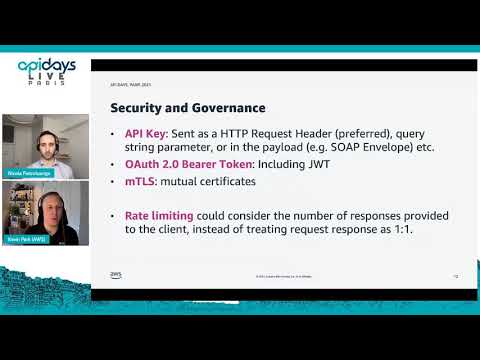
Explains how a single long-lived connection delivers continuous NDJSON chunks with NDJSON and keep-alive signals, and how producers use stream processors (examples: Apache Kafka and Flink) to aggregate, ETL and push updates; clients must handle out-of-order, missing or duplicate fragments and reconnects. Describes a replay cache to return missed seconds of events, compares server-sent events vs WebSocket, cites Twitter Streaming API and Go/Rails examples, and warns that cost and rate limits shift from requests to response egress.
AI-written summary · about
chapters (7)
- 0:00Intro
- 5:42Architecture Considerations
- 8:42Highlevel Architecture
- 10:48Examples
- 12:05Security Governance
- 14:04Conclusions
- 15:46Questions
related talks
 57mWhy and how to transform a REST API into a Data Streaming API
 14mStreaming the Web (it's not what you think)
 31mStreaming: Real-Time Architecture for Connected Products in Automotive
 40mBuilding an open Data Stream using Node.js, VanillaJS and Ably
 47mStream All the Things!
 01h 21mReactive Web Applications
 29mRealtime web applications with streaming REST
 21mREST APIs vs. Data Streams: Which Is Right for Your Business?