From “Backend to Backend” API to a better experience
summary
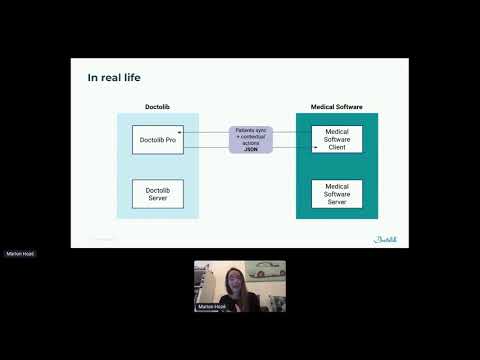
Doctolib builds a front-end integration: a Chrome extensions plus an interoperability proxy that transforms and dispatches messages between the web booking UI and many PMS formats, supporting roughly 7,000 medical structures. The proxy normalizes multiple standards, handles protocol-level dispatch, and enables contextual actions (book, open patient record, sync history) without deep back-end APIs. It works for mixed-size practices but raises identity‑monitoring, compatibility and maintenance costs, so a one‑size solution proves expensive and incomplete.
AI-written summary · about
chapters (7)
- 0:00Medical interoperability introduction
- 2:22Limits of current tools
- 5:14Complexity of standards and actors
- 9:11Front-end interoperability goal
- 13:44Solutions for small teams
- 16:59Front-end interoperability for all
- 19:07Conclusion and outlook
related talks
 23mOur Journey To a Unified Developer Experience With Backstage
 24mModernise using Event-Driven Architectures
 20mMastering API Management for Enhanced Patient Care
 23mAn Operating Model for API Platforms
 22mAPI’s in public healthcare – case Health Village
 09mRuby startup demo – Matt Duszynski
 30mCMS: Data at the Point of Care
 26mBackend For Frontend: Building APIs w. end user in mind