Asynchronous Web APIs in an Event Driven Architecture: when to use what

summary
Recommendation is to combine request/response APIs with event-driven APIs so UIs get real‑time updates while back ends stay scalable. Examples: stock tickers, live sports, notifications, collaborative editors; use an event broker like Kafka backbone for replay and fault tolerance, design for at-least-once with idempotent processing, and use CDC to migrate data incrementally instead of bulk batches. API gateway and developer portal coexistence is supported and AsyncAPI spec support coming in the next release.
AI-written summary · about
chapters (14)
- 0:00Intro
- 0:50Are virtual conferences more inclusive for people
- 3:40Introduction
- 6:20Meet the speakers
- 7:45API Manager
- 16:05What if I lose one message
- 18:30Examples in the financial insurance sector
- 19:45How Ninja synchronous API is managed
- 21:50Asynchronous API spec support
- 22:22Why is asynchronous API tooling so late
- 25:30How feasible is asynchronous for bulk data migration
- 28:29How to decide which events to receive
- 30:54Webhook pattern
- 33:07Asynchronous APIs based on Kafka
related talks
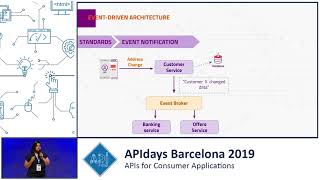 26mAsync API for Event Driven Architecture
 31mAsyncAPI is here to stay
 31mSpecify Your Asynchronous APIs with AsyncAPI
 28mEvent Driven API Management - Increase Reusability with AsyncAPI
 35mModern API Strategy: From Gateways to Event Mesh
 23mBroadening the API Landscape: AsyncAPI and CloudEvents in the Enterprise
 01h 03mOpenAPI and AsyncAPI, when to use which and why
 20mAPI Management for Event-Driven Microservices