SemanticAdapt: Optimization-based Adaptation of Mixed Reality Layouts Leveraging ...
summary
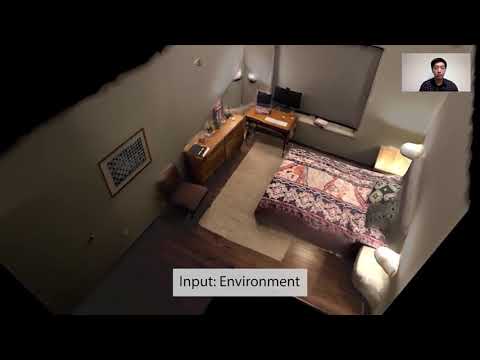
An optimization-backed system automatically assigns virtual UI elements to voxelized containers in new spaces using a linear program that encodes semantic anchoring and avoidance, utility, interaction needs, layout structure, temporal consistency, and visibility. It computes semantic similarity with WordNet path similarity, runs the solver in Unity via the Gurobi solver and NLTK, and is evaluated with 12 participants against a baseline, producing 33% fewer manual adjustments and higher perceived suitability.
AI-written summary · about
chapters (10)
- 0:00Introduction to SemanticAdapt
- 1:11Problem with manual layout adaptation
- 2:18Semantic connections in layouts
- 3:01Formative study and requirements
- 4:32SemanticAdapt approach overview
- 6:58Semantic similarity calculations
- 7:41Prototype and evaluation setup
- 8:28Evaluation results and findings
- 9:12Limitations and future work
- 9:32Conclusion and contributions
related talks
 14mAdaptique: Multi-objective and Context-aware Online Adaptation of Selection Techniques in Virtual...
 16mWalking with adaptive augmented reality workspaces: design and usage patterns
 03mACMGVR: Architecturally Consistent Mazes for Games in Virtual Reality
 21mAnnexing Reality: Enabling Opportunistic Use of Everyday Objects as Tangible Proxies in ...
 12mRemote Collaboration With Mixed Reality Displays: How Shared Virtual Landmarks Facilitate ...
 12mSensible Agent: A Framework for Unobtrusive Interaction with Proactive AR Agents
 19mErg-O: Ergonomic Optimization of Immersive Virtual Environments
 11mEchoLadder: Progressive AI-Assisted Design of Immersive VR Scenes