Using Sonar for Liveness Detection to Protect Smart Speakers against Remote Attackers

summary
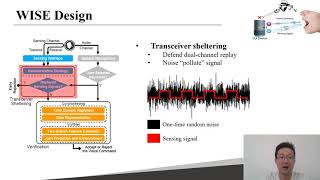
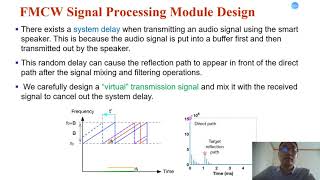
A sonar-based liveness detector emits an inaudible wide-band ultrasonic pulse and analyzes Doppler shifts from reflections using a Raspberry Pi 3B with a circular microphone array and a commodity speaker to imitate an Echo. It tracks user direction up to 2 meters and compares that bearing to the voice command source, rejecting commands unless user, hacked speaker, and smart speaker are nearly collinear. Evaluation reports 95.5% average attack-rejection at 2 m and reliable rejection beyond ~20 degrees, with precision falling for very small movements or beyond 2 m.
AI-written summary · about
chapters (8)
- 0:00Introduction to smart speakers
- 1:04Voice command vulnerabilities
- 1:53Speaker Zoner design
- 2:39System implementation
- 3:37Security analysis
- 4:14Signal processing methodology
- 5:03Evaluation and results
- 5:50Conclusion
related talks
 24mInaudible Voice Commands: The Long-Range Attack and Defense
 45mAnalogy Cyber Security—From 0101 to Mixed Signals
 06mAnti-Spoofing Voice Commands: A Generic Wireless Assisted Design
 24mCommanderSong: A Systematic Approach for Practical Adversarial Voice Recognition
 16mEchoLLM: LLM-Augmented Acoustic Eavesdropping Attack on Bone Conduction...
 06mYour Smart Speaker Can “Hear” Your Heartbeat!
 32mCommSec D1 - Attacking IoT Speakers
 39m Put Words In My Mouth