Isolation without Containers

summary
Claims that WebAssembly plus an ahead‑of‑time compiler and runtime can isolate thousands of sandboxes in a single process and hit production scale: seven million requests per second overall, tens of thousands per server, request latencies under five milliseconds. Uses WebAssembly linear memory, a VM context pointer, trap tables and a modified calling convention; applies cranelift for AOT codegen, bounds-check elision and large guard page mappings to avoid runtime slowdowns. A compiler/runtime that emits ELF shared objects is in development but not yet fully open source.
AI-written summary · about
chapters (17)
- 0:00Isolation without Containers
- 0:43Multi-tenancy
- 1:05Isolation?
- 1:52Resource Isolation
- 2:13Fault Detection, Isolation, and Recovery
- 4:23Fault Domain
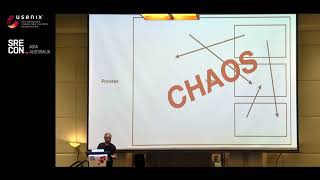
- 6:01Processes
- 7:07Virtual Memory
- 9:45Dynamic Libraries
- 12:50Higher-level Isolation
- 14:56Control Flow
- 15:26Memory Safety
- 18:41Calling Convention
- 20:28Trap Tables
- 22:39Bounds Checking
- 24:38Bounds Check Elision
- 30:37Review
related talks
 29mIsolation without Containers
 20mIsolation without Containers
 36mSandboxing Your Sandbox: Leveraging Hypervisors for WebAssembly Security
 48mDon't Trust Anything! Real-world Uses For WebAssembly
 53mWebAssembly
 24mWebAssembly as an Intermediate Language for Provably-Safe Software Sandboxing
 29mThe Return of Write Once, Run Anywhere
 26mSyscall Me by Your Name: Sandboxing Wasm Programs